i
‘My childhood home was one of the thousands of post-World War II houses constructed on land that once was farmed for potatoes and other crops on Long Island. Yet, my yard was bustling with nature: butterflies visiting flowers, eastern cottontails hiding in the landscaped shrubs, and English sparrows nesting in the eaves of our house.
One winter’s day, I discovered a strange growth on a branch of a dormant shrub. I thought it was a cocoon; it was a tawny-colored growth with a consistency of foam insulation. I brought it to my second-grade class to show my very knowledgeable teacher, but she did not know what it was and stuck it in an opened jar.
To her dismay, hundreds of tiny bugs hatched from the foamy case several weeks later and climbed on books and papers in the classroom. They were praying mantis nymphs. The nymphs resemble the adults—they look like baby mantids.
Praying mantids are ferocious-looking insects with large, protruding eyes on triangular heads. Their ability to resemble leaves and twigs enables them to “hide” in plain sight. They are skilled, deadly hunters of crickets, roaches, butterflies, and caterpillars. They are also known to eat larger prey, including frogs and hummingbirds. They are fearless ambush predators and will strike prey with their powerful, spiny front legs at lightning speed.
Females are larger than males; when mating, the female eats the male to gain nutrients and energy for healthy eggs. Just before winter, she lays hundreds of eggs and covers them with a frothy casing to protect them.
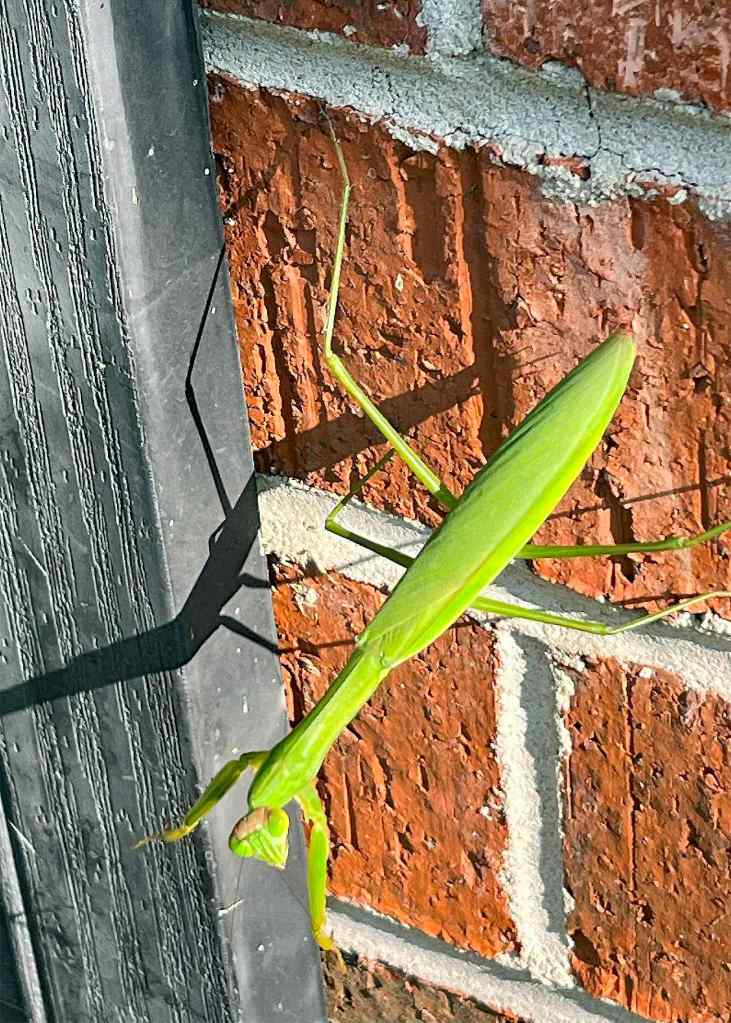
My grandkids found this mantis in Maryland. “It’s looking at me!” exclaimed my grandson. “It just turned its head to look at you, Peepaw.” There are over 2,000 species of mantids in the world, and here in Maryland, five kinds have been found. Only one is native; the others are invasive from other areas of the world.
 naturechirp