Drive on any country road in the Autumn, and you’ll be greeted by bursts of golden yellow, soft white, and violet-blue scattered along the roadsides and fields. These are the blossoms of goldenrods, asters, and other wildflowers, transforming the countryside into a living canvas.
These vivid blooms invite pollinators to sip on the flower’s sugary-rich nectar, a vital energy source necessary for the winter survival of bees, butterflies, and other insects preparing for winter. Bumblebees flit from bloom to bloom, gathering both nectar and pollen to store for their queen, the sole survivor of the colony for the winter. Come spring, she will rely on that pollen to nourish her first generation of young workers.
Monarch butterflies also depend on these late-season blossoms, fueling up for their long migration to Mexico. Other butterfly species rely on fall nectar to build strength for egg-laying, ensuring their caterpillars have enough energy to eat and pupate before the winter sets in.
Meanwhile, the seeds produced by these plants become essential food for birds and other wildlife in the winter.
In this way, the brilliant wildflowers of autumn are more than just splashes of color across the landscape—they are lifelines, sustaining pollinators, butterflies, and birds until the cycle of life begins anew in spring.
It is early autumn, and the super generation of monarch butterflies – those destined to live long enough to fly to Mexico — is hatching as caterpillars from barrel-shaped eggs laid meticulously on the underside of milkweed leaves. While the butterflies that laid the eggs will never make the epic journey south, this generation will.
The tiny, striped caterpillars eat their way out of the egg and feed on milkweed leaves. As they grow, they shed their skins several times, then hang upside down, forming the shape of the letter “J”. With their final molt, they begin the miraculous transformation into an adult butterfly.
Unfortunately, not every caterpillar will survive. Hungry wasps are hunting them down. In my daughter’s Maryland backyard, my wife found a paralyzed caterpillar about to be eaten by a yellow jacket. The yellow jackets sting the caterpillars, carrying them back to the colony to feed the queen and worker wasps.
Fortunately, during her lifetime, the female butterfly laid hundreds of eggs—one here, one there — on milkweeds along roadsides, in meadows and backyard gardens. If even just a few caterpillars survive, it will help maintain a healthy population for the species. Those that survive will ride on warm air currents south, guided by the sun and their magnetic compasses, flying up to a hundred miles a day, until they reach the central Mexico forests where they overwinter.
Yet, monarch populations continue to decline due to human activities. When milkweed patches are cleared or ploughed and insecticides are used to control pests, monarchs are left struggling to survive.
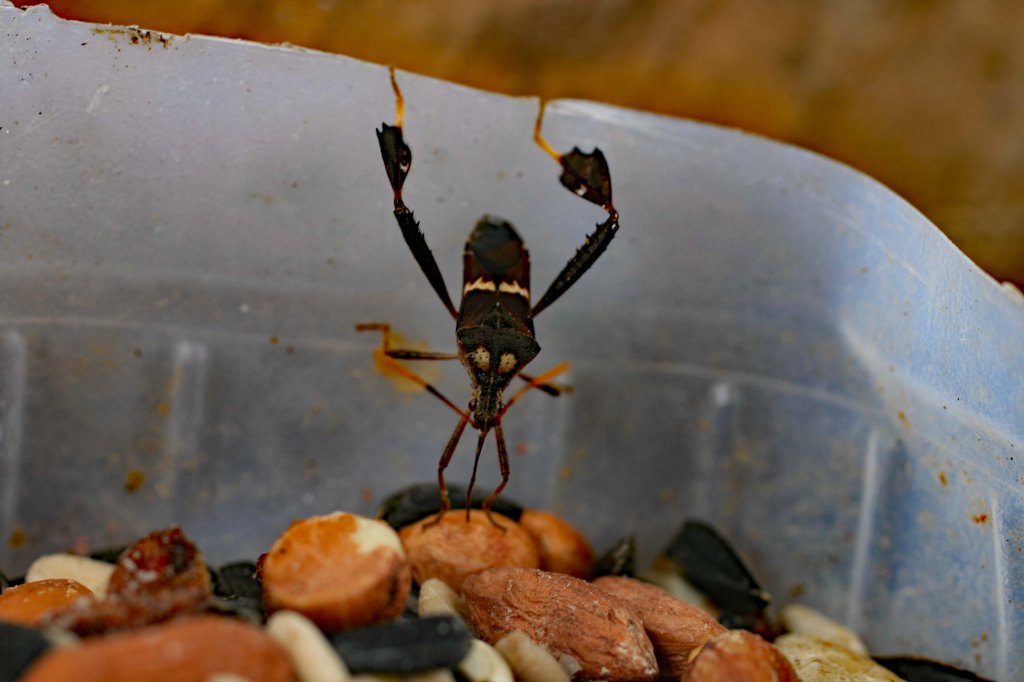
In the dappled sunlight of a late summer morning, my garden became alive with the soft humming of bees and the silent fluttering of butterfly wings sipping nectar from the backyard flowering bushes. Though it was summer, birds still visited the feeders to feast on various seeds. As I sat on my porch watching the morning wildlife show, I spied a creature, small and striking, armored and unique, in the bed of the seeds the birds had not yet eaten. It was the eastern-leaf-footed bug, named for the delicate, flattened extensions on its hind legs that resemble leaves.
It is a true bug, part of a diverse group of insects that includes aphids, cicadas, and hoppers. These insects have needle-like mouth parts to pierce and draw out the nourishing juices of plants. The eastern leaf-footed bug’s body is elongated and shield-like, shaded in ashy gray tones that blend in perfectly with the twigs and stems of plants. It has a white belt around its midrib and long, probing antennae tipped in orange, which help the bug sense its surroundings.
Its life began as a nymph, hatching from a cluster of eggs nestled in the leaves of plants in the warmth of late spring. It was a tiny bead of amber, defenseless, facing a world of opportunity and danger. Its siblings hung together for safety, sucking the juices of the plant they were born on, moving together as one unit. Their red color warned predators of their distastefulness.
As the days lengthened and the sun grew brighter, the nymphs shed their skins, each molt bringing them closer to adulthood. Their skins hardened, and the leaf-like appendages on their hind legs expanded. They began to venture from the safety of the bush to find fruit and seeds to pierce with their sharp beaks to suck the life-sustaining juices. One of them found its way to my bird feeder with a banquet of seeds to feed on. Piercing the shell of one of the seeds, it began to drink the seed’s nutritious fluid.
I can only imagine the dangers it faced finding its way to the feeder. Hungry birds with keen eyesight might spot it, and preying mantids and spiders might find it amongst the shadows of the leafy vegetation. Its only defense is to freeze, hoping these predators don’t detect it. If they do, it will emit a foul odor, making them unappetizing.
At summer’s end, the eastern leaf hopper’s cycle is nearly complete, and as the days shorten, the air grows crisp, and the leaves on the plants wilt, these bugs retreat to the safety of the leaf litter for the winter. Though many will freeze to death, the eggs they left behind will ensure the survival of their kind for the following year.
I returned to the feeder as the sun dipped below the western horizon. The bug had already slipped into the brush, likely clinging to the underside of a leaf. My encounter with this small creature reflected something we all share – a story of transformation, adaptation, and resilience.
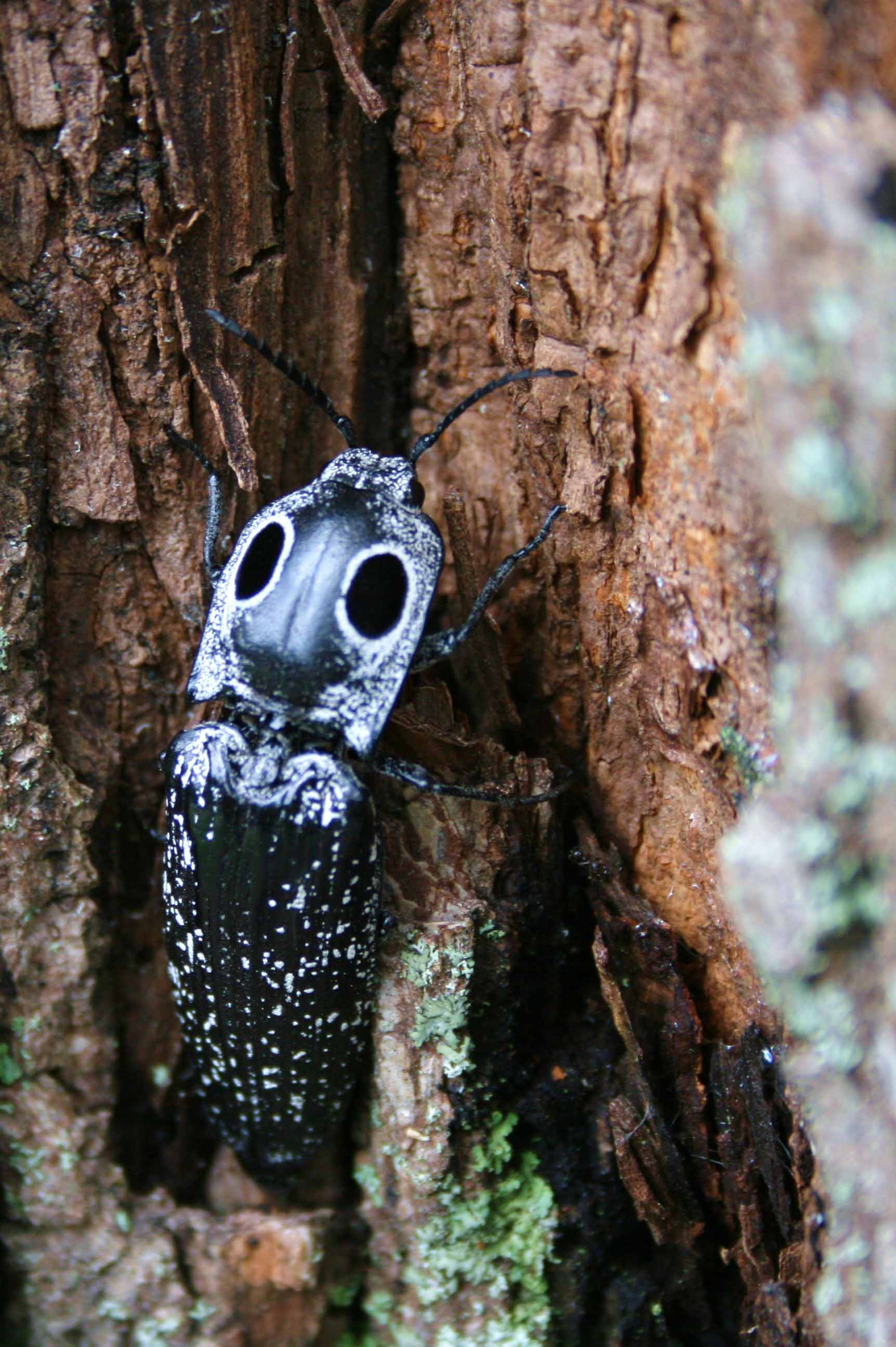
While wandering through the sun-dappled oak woodlands in a park on Long Island, I paused beside a rotting oak tree to examine a cluster of mushrooms sprouting near its base. I knelt to get a closer look, when in the corner of my eye, I spotted Nearby, I spotted a black bug lying on its back, its legs frantically grasping at the air. Just as I reached over to help it, it sprang into the air with a loud, sudden click, landed upright, and darted into the brush. I caught a glimpse of its slender body marked with what looked like fake eyes just behind its head.
A few days later, in the same patch of woodlands, I spotted another of these beetles basking in a sliver of sunlight from the morning sun. I froze, careful not to startle it, as it remained perfectly still. I leaned in for a better look, and with a snap, it sprang into action, disappearing into the decaying leaf litter of the forest.
Eastern-eyed click beetles are among the largest in North America. They are distinguished by black bodies with gray and white markings. Their most striking features are their two eyespots and an ingenious form of mimicry to protect themselves from predators.
Like many other beetles, the click beetle lays its eggs in the soil or decaying wood. The larvae, known as wireworms, are voracious predators that feed on the larvae of other insects. They live for several years before pupating and emerging as adult beetles. Adults are thought to feed on nectar and pollen.
Now, whenever I walk through the woodlands, I scan the forest floor and listen for the clicking of these fascinating insects. What began as a chance encounter with a bug on that summer’s day, became a deeper appreciation for the remarkable ways insects survive in the rotting wood on the forest floor.
When people think about milkweed, the monarch butterfly comes to mind. Monarch butterflies’ existence depends on this plant. It is a source of nourishing nectar; its leaves are essential for growing caterpillars. Without milkweed, monarch butterflies would become extinct.
Common milkweed also hosts other living things. Walk into a milkweed patch, and you will find it bustling with life. This plant’s rich nectar attracts honeybees, bumblebees, moths, and many species of butterflies. It is also home to tiger beetles hunting for small insects, ants climbing milkweed stems to harvest the honeydew excreted by milkweed aphids that are sucking the sap of the plants’ stems, tussock moth caterpillars munching milkweed leaves, milkweed bugs that eat the plant’s seeds, wasps hunting caterpillar prey, and ambush bugs and spiders that hide in its leaves and flowers waiting to pounce on insects visiting the milkweed patch.
My Maryland daughter was surprised to see hummingbirds visiting he backyard milkweed patch where they drank the milkweed’s sweet nectar.
Unfortunately, milkweeds are declining due to habitat loss and the use of herbicides. This loss impacts not only monarch butterflies but all other organisms that rely on milkweed.
You can help by protecting and planting milkweed in your yard, advocating for the protection of this plant in your neighborhood, and spreading the word about the importance of preserving this plant. By taking these actions, you can help maintain the biodiversity of the milkweed patch.
 naturechirp