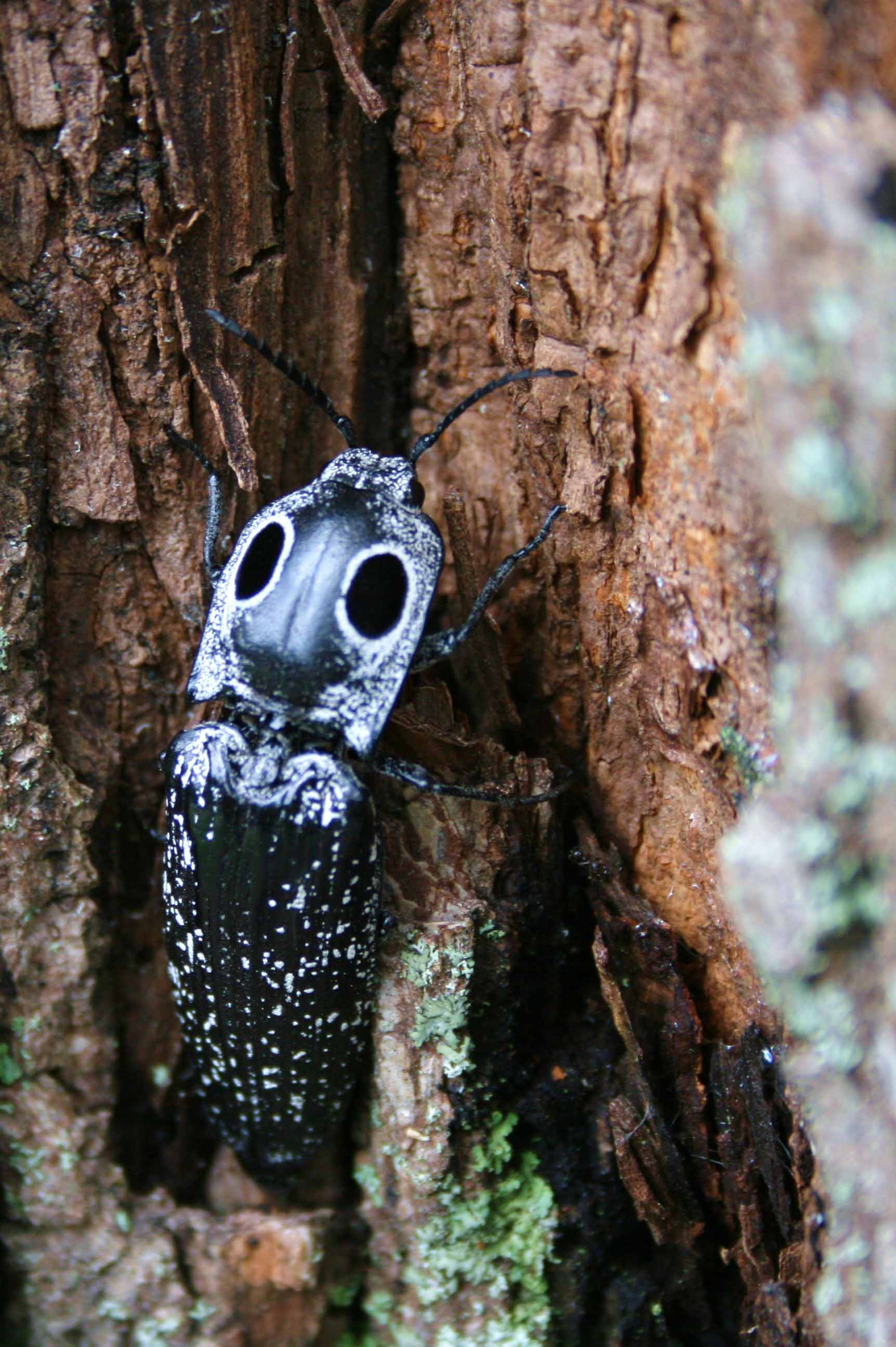
While wandering through the sun-dappled oak woodlands in a park on Long Island, I paused beside a rotting oak tree to examine a cluster of mushrooms sprouting near its base. I knelt to get a closer look, when in the corner of my eye, I spotted Nearby, I spotted a black bug lying on its back, its legs frantically grasping at the air. Just as I reached over to help it, it sprang into the air with a loud, sudden click, landed upright, and darted into the brush. I caught a glimpse of its slender body marked with what looked like fake eyes just behind its head.
A few days later, in the same patch of woodlands, I spotted another of these beetles basking in a sliver of sunlight from the morning sun. I froze, careful not to startle it, as it remained perfectly still. I leaned in for a better look, and with a snap, it sprang into action, disappearing into the decaying leaf litter of the forest.
Eastern-eyed click beetles are among the largest in North America. They are distinguished by black bodies with gray and white markings. Their most striking features are their two eyespots and an ingenious form of mimicry to protect themselves from predators.
Like many other beetles, the click beetle lays its eggs in the soil or decaying wood. The larvae, known as wireworms, are voracious predators that feed on the larvae of other insects. They live for several years before pupating and emerging as adult beetles. Adults are thought to feed on nectar and pollen.
Now, whenever I walk through the woodlands, I scan the forest floor and listen for the clicking of these fascinating insects. What began as a chance encounter with a bug on that summer’s day, became a deeper appreciation for the remarkable ways insects survive in the rotting wood on the forest floor.
 naturechirp
Click beetles are so cool. One with big eyes is even cooler
LikeLike