Leave a comment

Cholla Cacti


Several species of this cactus is common in the Mojave Desert at Red Rock Canyon. Its needle like leaves also reduces loss of moisture through transpiration and its roots are adept at collecting what little rain falls. It produces fruit eaten by big-horn sheep, chipmunks and rabbits. Birds like to nest in this shrub; it is not too spiny for birds but spiny enough to keep away predators.

Leave a comment

Mojave Rabbitbrush

It is autumn and the Mojave Desert at Red Rock Canyon is ablaze in yellow from the blooming of the Mojave Rabbitbrush shrub. When a plant has such showy flowers, it is trying to attract insects to pollinate it. Bees, flies and butterflies come to the flowers to sip nectar and in doing so the blossom’s pollen sticks to the insects. As the bugs travel from flower to flower pollen falls off and sticks on guaranteeing the seed production of the plant thus the survival of the species.

Leave a comment

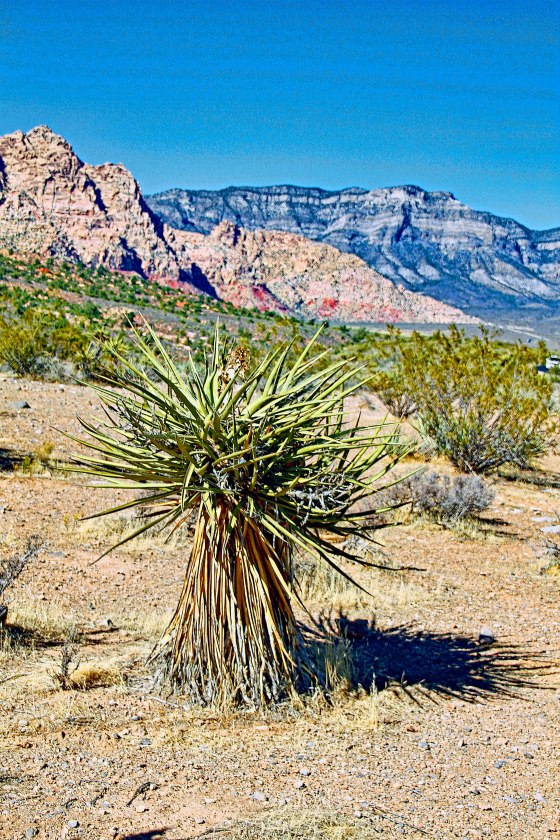
Mojave Yucca

This is a common plant of the Mojave Desert where, like many other plants, it has adapted to the water scarce ecosystem. With thick waxy coatings to its leaves to reduce loss of water through transpiration and thick roots to store water, this plant thrives in rocky slopes and mesas of the desert.

Leave a comment

Beavertail Cactus

This is a low spreading plant of dry, rocky slopes in the Mojave Desert at Red Rock Canyon. It is well adapted to grow in the parched desert environment. As with other desert cacti, this plant’s leaves are spines. These thorny leaves have less surface area than broad leaves of deciduous plants. This reduces water loss to transpiration. Additionally, these spikes protect the plant from herbivores (plant-eating wildlife). Its many roots spread out to capture what little rain falls. Water is stored in the plant’s thick leaf pads which helps the plant remain viable during periods of dryness.

Leave a comment

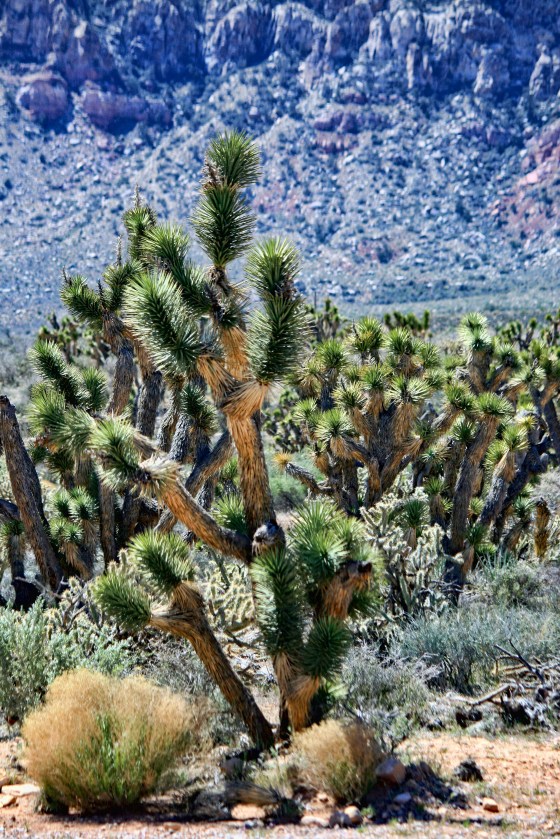
The Joshua Tree – A Desert Survivalist

The Joshua tree, named by Mormon pioneers after their prophet, is the signature plant of the Mojave Desert. This is the only place in the world it is found. It is an evergreen plant that can reach a height of 40 feet and live for upwards of 200 years.

It endures the harsh, dry desert environment through several adaptations. When it rains in the desert, the upward reaching needle-like leaves direct the water to the main trunk into the soil where shallow roots absorb the water and the deeper tap roots store it.

The Joshua Tree has ways to reduce the loss of moisture from transpiration (evaporation of water from the plant). Any plant with needle-like leaves limits water loss due to a reduced surface area. The leaves also have a waxy coating that helps lessen water loss.

This resilient plant is indicative of how many desert plants survive the arid desert habitat.