Making a circular migration route of up to 1,000 miles and numbering 1.5 million animals, the wildebeest takes the record for the largest migration on earth. Wildebeests live on African savannas where they feast on wild grasses and other herbaceous plants. After the rainy season ends in May and June, these large African antelope migrate in with hundreds of thousands of other African animals including zebras and gazelles from the Serengeti Plain to the Savannas where food and water is plentiful. Thousands drown and many are eaten by crocodiles when they cross the Mara River during their migration. Due to high reproduction rates, the population of this species is stable.
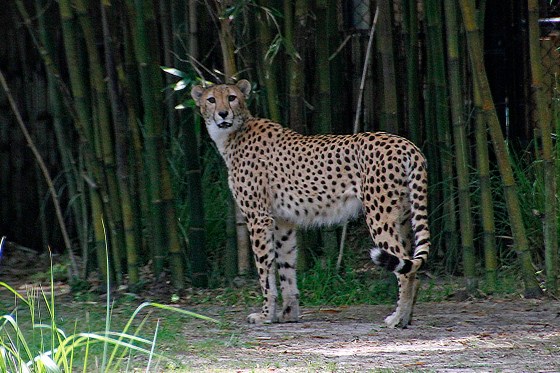
World’s Fastest Land Mammal

Able to reach speeds up to 70 m.p.h. for short sprints, the cheetah is the world’s swiftness land animal. The cheetah becomes so exhausted after catching prey that it takes this cat a half an hour to catch its breath before it can eat its meal. Though we associate cheetahs with Africa, they once roamed areas from south Africa north into India. Today Cheetahs live in the African savanna where they hunt impalas, gazelles and young wildebeests. There are less than 200 cheetahs in small isolated populations in Iran where it preys on sheep, wild goats and rabbits. Once numbering 100,000 in their historic range in the early 1900’s, the Cheetah’s population has dwindled to about 10,000 today.
Our Closest Living Relative!

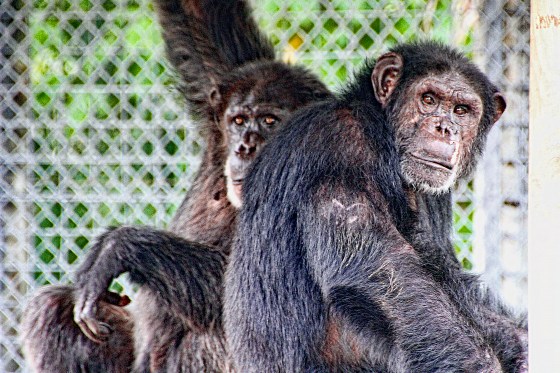
Sharing 98% of our DNA, the chimpanzee is a great ape that lives in the dense tropical forests of Africa. Apes are different from monkeys in that they lack the tails that monkeys have, walk upright at times, are bigger and have a larger, more developed brain. Chimpanzees weigh 70 – 130 lbs. when full grown, but have far greater strength than humans do. These apes eat nuts, fruit, seeds, insects and sometimes the occasional monkey. There was once upwards of two million chimpanzees on earth. Now their population is down to between 100,000 – 200,000 individuals. Like other African animals, habitat loss and hunting have contributed to their decline.
World’s Tallest Land Mammal
Standing up to 18 feet tall and weighing upwards of 3,000 pounds, the giraffe lives on the African savanna where trees flourish. Giraffes browse on acacia trees (those are the umbrella like trees of the African savanna) and mimosa and apricot trees. The giraffe’s heart is huge. It is 2 feet long and weighs 25 lbs. It has to be large enough to pump blood up that long neck. Due to shrinking habitat from farming, roads and communities the giraffe population is shrinking as well. Alarmingly, it is also hunted. I photographed these pictures at Busch Gardens and the Lowery Park Zoo in Tampa.
World’s Second Largest Land Mammal
Standing at 6 feet tall and weighing upwards of 7,000 lbs., the White Rhinoceros is a large mammal of the African plains. It is a grazer that eats mostly grasses on the savanna. There are about 20,000 white rhinos in existence, but their population is threatened by the trafficking of their horns in Asian markets where the horns are ground up for unproven medical purposes. One of the most horrific events happened at a French zoo earlier this year (2017) where poachers entered the zoo at night to kill and saw off the horns of a white rhinoceros. Over 1,000 rhinos are slaughtered annually for their horns. Wildlife organizations are working to protect these gentle creatures through anti-poaching efforts and increasing international law enforcement to prevent the distribution of rhino horns around the world.