1 Comment

What do Birds do During a Hurricane?

Anne and I hunkered down in our daughter and son-in-laws’ home on Long Island when hurricane Sandy struck the New York area. We were there for our granddaughter’s christening the day before the brunt force of the storm hit. Outdoor pictures of blowing hair with baby Teagan in front of the church were evidence that the storm was approaching. The christening party was dominated by talk of the impending storm and the preparations people made while children played on the backyard swing set. The following morning we awoke to the sound of rustling branches and whistling power lines. The winds became stronger with each hour that passed on.

Later, I stepped outside onto the concrete stoop to witness nature’s fury. The anxiety of the storm caused my heart to beat faster. Two 60 foot Norway spruce trees swayed, pushed by tropical storm force winds that lasted hours not minutes. Frequent bursts of 94 m.p.h. winds, wreaked havoc in this suburban neighborhood. It pushed trees over, the roots unable to hold them in place. Oak trees, that appeared healthy on the outside, snapped and fell across power lines, revealing the rot and decay within. I thought about squirrels, sheltered within the cavities of these trees. How were they handling this storm? A large flock of blackbirds, most likely grackles, suddenly appeared. They were flying into the wind, actually making forward progress. Downdrafts forced some of the birds, towards the ground, yet they recovered and joined the flock.  I retreated to the safety of the house and closed the door behind me.

After the storm, northern lapwings, birds native to Scandinavia were seen in Massachusetts. In their effort to fly south to the African coast for the winter, they were carried out to sea by Hurricane Sandy and dumped on the east coast of North America. Pelicans from as far south as Florida were swept up by this maelstrom landing in New England. Many were exhausted and injured, some could not recover and died. Parmarine jaegers, birds that nest in the Canadian tundra and migrate to the oceans to winter also got caught up with the wind and were cast off in Pennsylvania. Gannets, birds that live mostly out at sea, found themselves on the Hudson River in New York.

When birds sense a drop in barometric pressure, they scramble just like we do. Gulls, terns and other coastal species flee inland; others abandon the area by taking advantage of the strong winds on the forefront of the storm. Many birds hunker down in the shelter of the leaf litter, amongst dense vegetation and on the leeward side of large trees, fences and buildings. Pelagic birds, birds that live mostly over the ocean, seek the calm eye of the storm where they move with it and await for the storm to dissipate oftentimes dropping the birds hundreds of miles inland.

Once the storm dissipated, Anne and I roamed the neighborhood surveying the damage and were grateful that we and our family were safe. We were without power and modern conveniences, but we still had a home to stay in and food to eat unlike the thousands of people who lost their homes. Crows flew overhead. Squirrels and sparrows scratched through piles of fallen leaves looking for insects and seeds. A red-bellied woodpecker emerged from a hole is in an old maple tree that survived the storm. We all, birds, animals and people survived the largest most powerful storm of our lives.
Leave a comment

Weekly Photo Challenge: Geometry

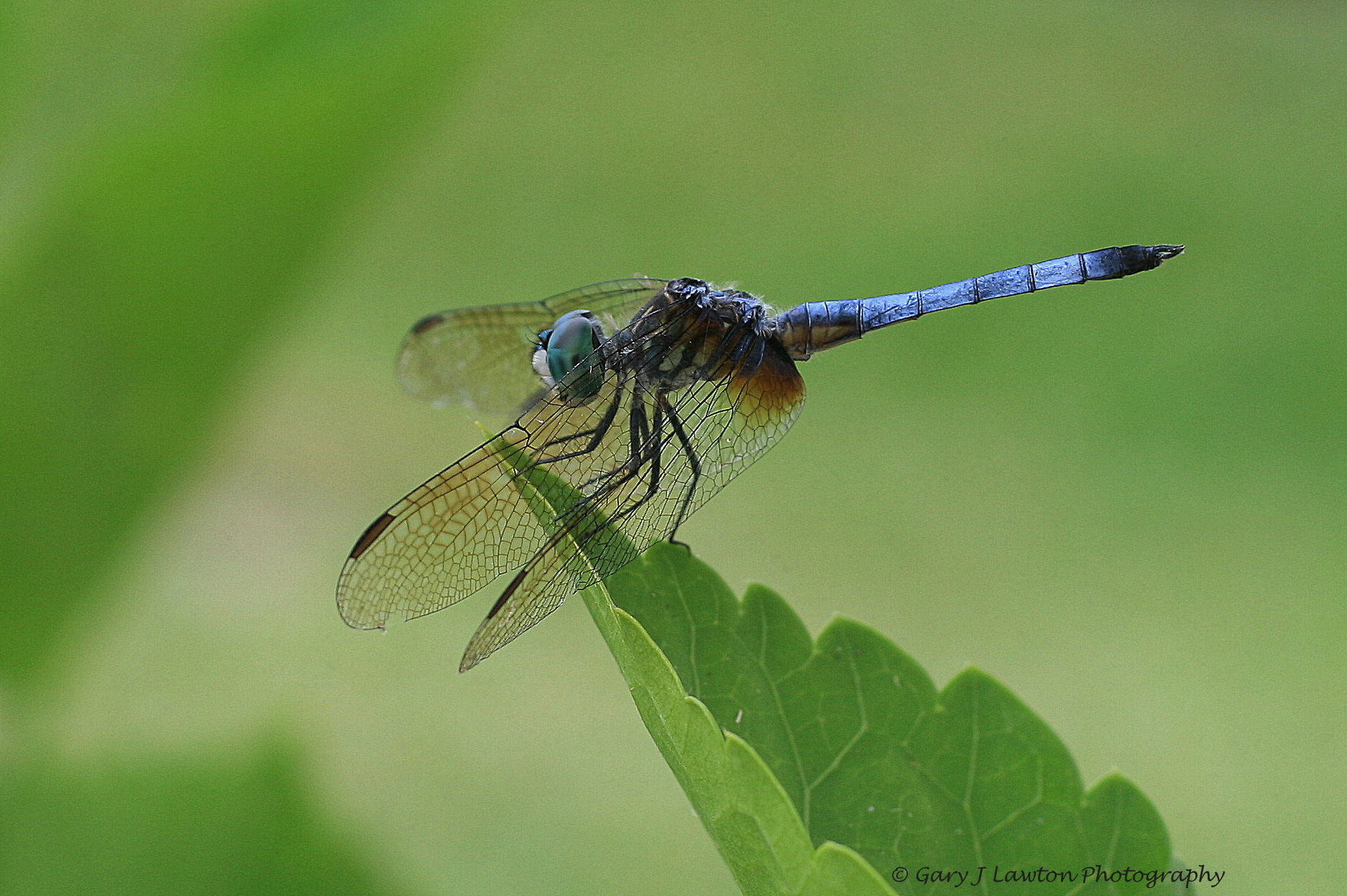
Great Blue Skimmer “poses” for pictures.

This great blue skimmer caught my eye when I walked out of the house to check my mailbox . It perched on the tip of a hibiscus leaf and tilted its head as if to look at me when I approached it. It was not alarmed at my presence so I took advantage of this opportunity to photograph it and observe its behavior. This skimmer tilted its head and flew up to snatch a smaller insect from the air. It returned to the same leaf, and ate the tiny bug. It continued to “pose” for me as I snapped one picture after another at various settings. I marveled at the geometric shapes on its wings that formed chain-like patterns. Again it lifted off the leaf, but I think it missed its prey because it returned to its perch without a tasty morsel. It remained still, only tilting its head from time to time; I assume something caught its compound eyes. I thanked this beautiful creature for eating pesky bugs and for posing for me.

Leave a comment

A Halloween Treat!

This slideshow requires JavaScript.

It is a perfect day to see myriads of butterflies in the gardens and natural areas in our community, the sun is shining and temperatures are warming the morning air. I grab my camera, leave the house and find my way to the grassy areas and woodlands along Lake Tsala Apopka. It is not long before I spot my first butterfly. It flutters  just above the grassy field, lands on a small white flower, unfurls its proboscis, pushes it into the flower, probes for nectar, sucks it up, recoils its straw, alights, stops at another blossom, uncoils, probes, sucks, rises, and continues this relentless quest for its sustenance of life.

It is the beautiful gulf fritillary. Small black circles dot the pumpkin-orange wings, black markings hug the wing margins, and veins that resemble narrow silver zippers adorn the the top of the forewings. This butterfly reveals its true beauty when it rests and folds its wings. Elongated white markings on a burnt-orange velvet canvass decorate the butterfly’s underside. These markings announce “I am a gulf fritillary” to other butterflies and to me.

The green grass stippled with white flowers is alive with dozens of pumpkin-orange flashes as other gulf fritillaries join in the quest for nectar. When I see this, I am reminded that Halloween is upon us. What a great Halloween treat for a naturalist like me!

Leave a comment

A Peacock that is not a Bird…

This slideshow requires JavaScript.

A pale colored butterfly lands on a small white flower, closes its wings, unfurls its coiled tube and pushes it into the blossom. It alights, flies close to the ground, finds another flower and repeats the process. Its quest for nectar is relentless. Nectar is its sustenance.

When it opens its wings, light brown smudges on an off-white canvas and a double row of orange crescents that border the scalloped wing edges appear. Whether its wings are opened wide or folded closed, three sets of eyespots are clearly visible, one pair on the forewings and two pair on the hindwings. It’s a facade that makes the butterfly appear bigger than it really is. It confuses would-be predators.

Its light off-white color adorned with these eyespots is why it was named the white peacock butterfly. It lives here in the southeastern U.S. and ranges as far south as Argentina.

White peacocks continue the quest for nectar over the fields and woodlands in our community where autumn wildflowers still bloom. I see one butterfly with a tattered wing. Undoubtedly a hungry predator attempted to eat it, perhaps by poking its “eyes” out. Yet the strong instinct to survive and its evolutionary design enable the species to endure.

4 Comments

Weekly Photo Challenge: Silhouette

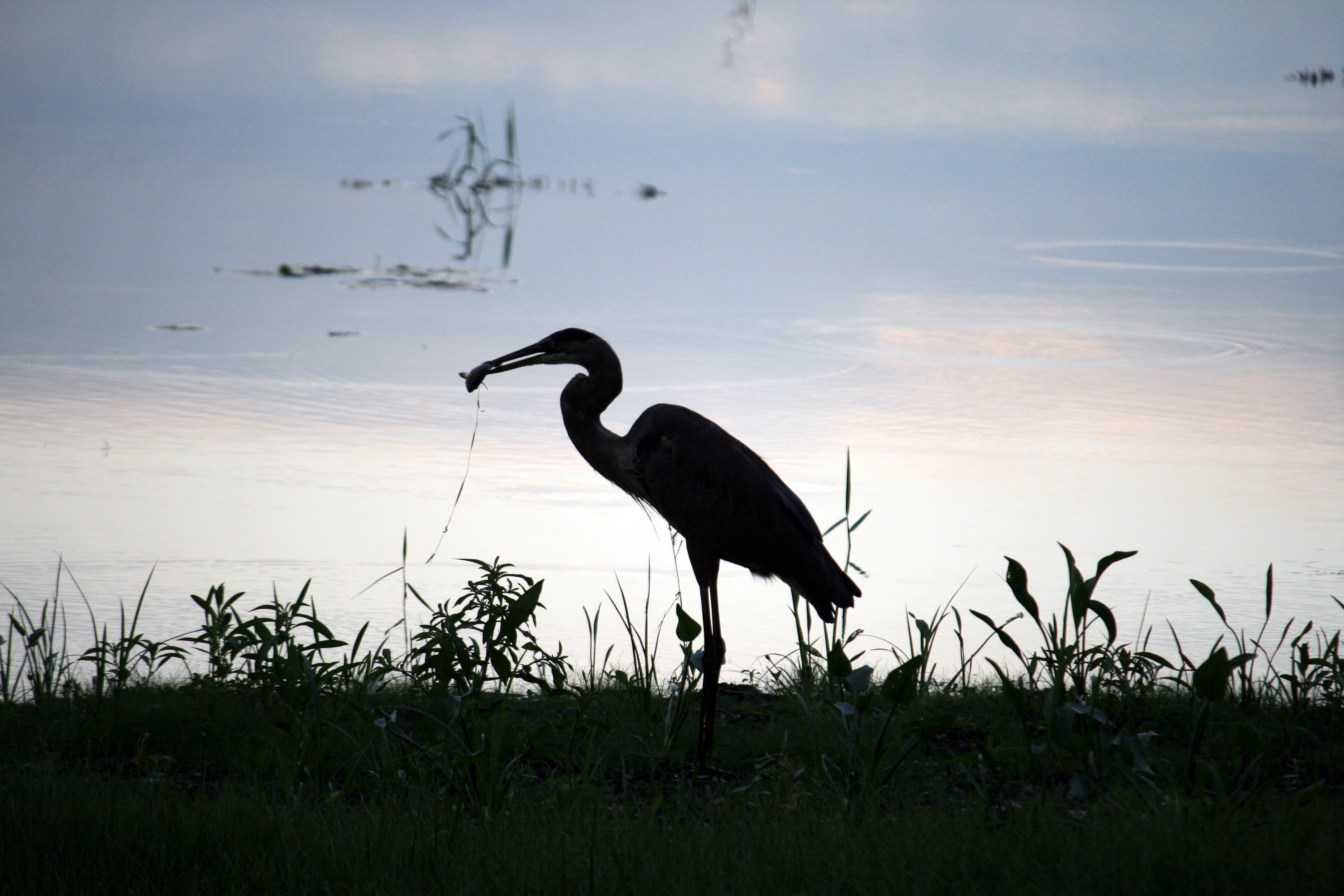
Great blue heron eats a blue-gill fish for breakfast.

Walking along the edge of Lake Tsala Apopka in Florida in the early morning, I caught this great blue heron knee-deep in the water eating breakfast. At first I wished I was in a kayak in the pond so I could get a picture of it with the first rays of light reflecting off its feathers, but I photographed it anyway and captured a nice silhouette image. I had a lump in my throat when it tossed the fish around to swallow it whole.  Then it continued to hunt for more fish. Oh well, time to head back for my breakfast, but it won’t be fish!!!